Politics, society and science.
Driving polluting industries offshore is not always the best decision for the planet.
This is an interview on Inside Business on Sunday the 27th of February 2011.
What does Paul O'Malley, CEO Bluescope Steel, say about the achievements of Europe in reducing their own green house emissions but increase carbon consumption by 47%?
Paul O'Malley states that you can not make steel through the blast furnace technology without significant green house emissions. What is the blast furnace technology that emits so much CO2?
What are the dangers to the planet if Australian steel makers are shut down, according to O'Malley?
How does O'Malley propose carbon taxing of manufacturing be structured and why?
O'Malley agrees that carbon tax should apply to the energy industry. What are his reasons?
Why is the Government targeting the resource sector for carbon taxing?
According to O'Malley how does the Goverment hide the carbon emissions in order to meet emission targets?
Political decisions are often driven by community demands and public opinion. Take the Australian Government's decision to impose a carbon tax on the steel industry for example. The production of steel takes place in a blast furnace, simply depicted on the right. Such is the chemistry of steel production that a great deal of carbon dioxide is produced. Some politicians argue that Australia should not be involved in steel manufacturing as it is inherently a source of green house gases. Our steel can be imported cheaply and with little impact on the environment. A carbon tax is been implemented to impose a penalty on high polluting industries. Australian steel makers argue that this is not a fair tax and is counter productive. Moving steel making offshore will only pass the generation of green house gases off to another location on the planet and, by making steel cheaper to produce, will increase CO2 emissions.
|
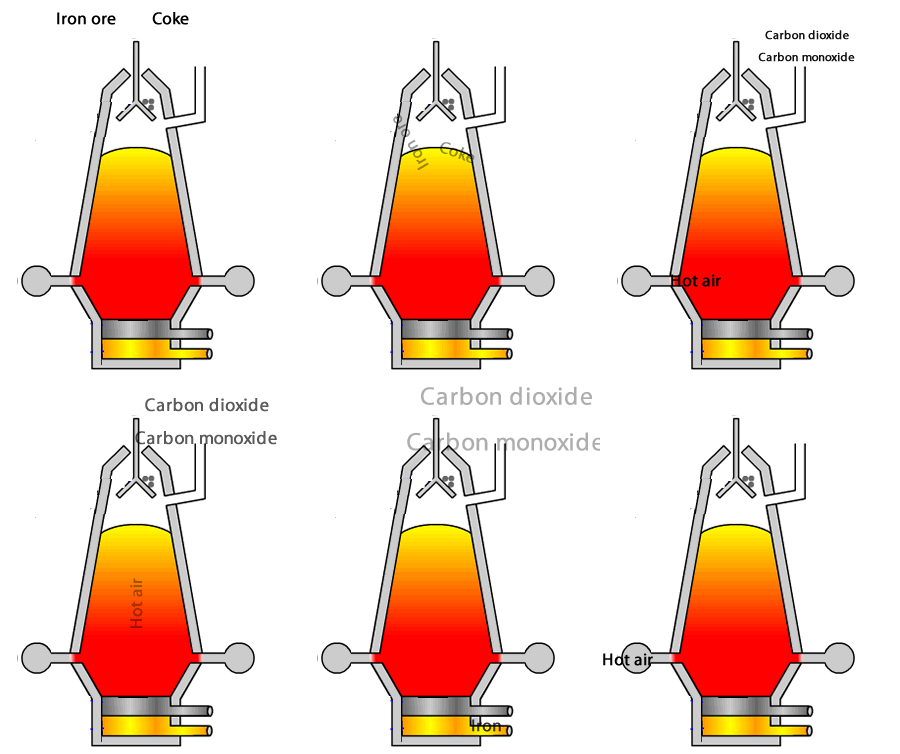 |
What is it about the chemistry of steel manufacture the causes such a high output of CO2 ? *Unlike The Energy Sector where there are at least some alternatives and a carbon tax may encourage investment in low carbon alternatives, what is the alternative for the steel industry? Can we do without steel in a growing economy or do we have alternatives? Explain. Quite often it is not a clear case of taxing the polluting industries. Argue why driving the Austrlaina Steel Industry offshore will be detrimental to green house emissions. Argue for or against the statement "Our steel can be imported cheaply and with little impact on the environment".. * research may be required to answer this question. |
|